Resolution 2026: Westpfel Co., Ming Chin Hsieh, Wild Guess
Posted: January 29th, 2026 | Author: Nicholas Minns | Filed under: Festival | Tags: Chris Vasileiadi, David Street, Deavion Brown, Eden Law Gleen, Emma Houston, Hannah Arbury, Harry Walker, Jack Manley, Margot Conde Arenas, Megan Westpfel, Ming Chin Hsieh, Resolution 2026, Robbie Hall, Sammy Consamti, Wild Guess | Comments Off on Resolution 2026: Westpfel Co., Ming Chin Hsieh, Wild GuessResolution 2026 : Westpfel Co., Ming Chin Hsieh, Wild Guess at The Place, January 14
Resolution is a festival of new choreography and on Wednesday it proved the perfect antidote to a damp evening in London. Behind the well-stocked bar at The Place is a warm, crowded theatre space where young choreographers can take risks in front of an audience that expects them. It’s a place where anything can happen, and this evening anything did.
Yo-Yo Ma once answered the question, ‘What is music to you?’ He replied very simply, ‘Music is energy; we are energy. Music is part of us.’ Watching Resolution on Wednesday leaves no doubt that dance, too, is palpable energy, but the three performances played with energy and passed on that energy to the audience in three very different ways.
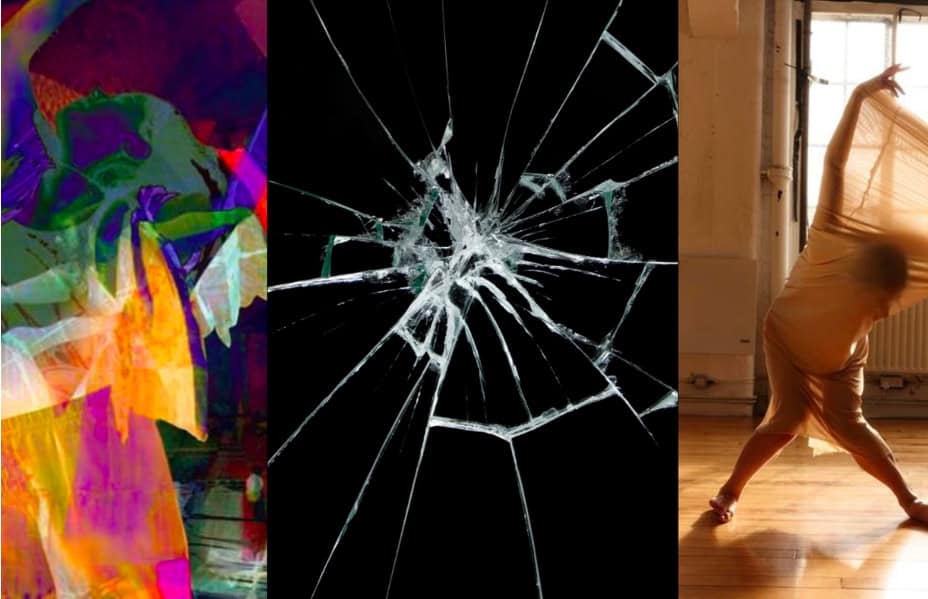
Megan Westpfel’s Fracture immediately assails our bodies with a rush of raw energy wrapped in stylish costumes under rock concert lighting by David Street and fed by Jack Manley’s immersive, pulsing electronic score. In just 3 days of rehearsal, Westpfel drilled her six dancers — Sammy Consamti, Eden Law Gleen, Hannah Arbury, Deavion Brown, Emma Houston and Chris Vasileiadi — with an eye to detail that is so polished they shine with almost mechanical precision. That may be part of the scenario; the drilled precision and evening dress with ghoulish masks makes way for a more laid-back, laid bare aesthetic that underlies what Westpfel describes as a process that ‘delves into the process of embodying who you truly are before the world told you who to be.’ Fracture is a protest that is choreographically more convincing in its angry preamble than it is in its resolution but there is a cohesion to the work and a blast in its production values that belies its fast-track birth. The intense energy it produced was returned in full in the audience reaction.
The Resolution format of clearing the auditorium in between each work serves here as a necessary breathing space between Fracture and Ming Chin Hsieh’s Born, Never Asked. Hsieh’s solo has a soft yet powerful internal energy that is beguiling in its conception and performance, choreographed as a ‘tender exploration of what love requires, seen through the fragile bond between mother and daughter.’ Hsieh is already sitting on stage as we return to our seats, wearing a white mask and gathering up five identical masks in front of her inside one other, her expressive body shuddering and relaxing in turn as she appears to be communicating with a departed spirit. This is the choreographic premise that informs Born, Never Asked, from a mimed birth to a final veiled negotiation with her past that, as the title suggests, is never fully resolved. As well as the masks, Hsieh uses materials — her stretch fabric dress and a tulle veil — to suggest and diffuse her states of mind that range from affection to pain, from light to darkness. She combines a fluid dance style with a high degree of mime artistry that communicates a temporal and spatial distance between herself and her mother while keeping our imagination flowing with hers.
Returning from another intermission, the setup for Attention Economy by the performance collective Wild Guess gives the impression of an aleatory event with three performers and a sampling machine. Formally, it’s a ‘collaboration between poet and playwright Harry Walker, movement artist Margot Conde Arenas, and sound artist Robbie Hall’ but essentially what Wild Guess is proposing is ‘a cerebral collision of seemingly dissonant forms and ideas, a fitting representation of a liquid modernity.’ Hall lays down a track and manipulates it. He holds up a board on which is written ‘COLLAPSE’. Walker reads a poem from his notebook as he walks around the stage in his hooded anorak, but his words are inaudible. Arenas shines a flashlight on herself as she follows Walker round the stage while Hall holds up the second board, ‘CHANGE RELATIONS’. There are more boards, more messages punctuating Arenas’ somatic landscape and Walker’s intermittently audible lines of poetry that seem designed to avoid their mark. I pick out ‘thought without rhyme or reason’ and wonder if that is an appropriate epitaph for ‘liquid modernity’. Attention Economy is a brave new work, but the cerebral collision turns into a bit of a damp squib; by the time the trio of disparate characters finishes propped against each other in a gesture of yogic improbability even the energy in the theatre has seeped away.